
Brand voice for AI: you build it, you don't just describe it

To get consistent brand voice for AI, give the model real examples of how your brand writes, not adjectives about how it feels. Have you ever wondered how it is so simple to get an LLM to write like a personal brand but, it is much harder for a business brand? The reason is a personal brand is already there and can easily be extracted through an extensive corpus of emails, messages, posts and voice notes. Whereas a business has to construct one on purpose. Anchor the voice in a worldview, set explicit "we say" and "we don't say" rules, then feed the AI a corpus of gold-standard passages. That's what makes AI sound like your brand.
Key takeaways
- Brand voice for AI comes from real examples, not adjective lists. Words like "confident" or "warm" barely shift a model's output.
- A personal voice is extracted from an existing corpus; a business voice has to be built deliberately.
- A "we say / we don't say" table constrains word choice in a way abstract traits never do.
- Voice is constant across your brand; tone flexes by use case, audience and channel.
- A model learns tone from good and bad examples at the use-case level, not from adjectives.
- If your brand has no corpus, build one: golden sample messages plus a founder interview.
- Consistent brand presentation can lift revenue by up to 33%, yet only about 30% of organisations that have guidelines use them consistently (Lucidpress/Marq brand consistency study).
Why does a personal brand find its voice while a business has to build one?
A personal brand finds its voice because the voice already exists on the page. Years of emails, posts, captions and talks are a ready-made corpus. The person doesn't invent a voice, they surface the one they've been using all along.
A business rarely has that. Its writing is spread across people, tools and eras, and much of it contradicts itself. There's no single author, so there's no single voice to extract.
That's the core split: a personal voice is extracted, a business voice is constructed. Construction takes intent and a source of truth, not a mood board. Fragmentation is the enemy here, because a disjointed team is as off-brand as an under-briefed model.
The Lucidpress/Marq brand consistency study found that 95% of organisations have brand guidelines but only about 30% use them consistently. A voice that lives in a document nobody applies is no better than no voice at all, and AI makes the gap show faster because output drifts one prompt at a time.
Why do most brand voice guidelines fail with AI?
Most brand voice guidelines fail with AI because they're lists of adjectives, and adjectives don't constrain a single word choice. "Friendly, professional, bold" reads well in a deck and changes almost nothing in the output.
A model predicts the next word from patterns in its training data. Telling it to be "confident" nudges a vast distribution by a hair. It has seen millions of things labelled confident, so the instruction is too vague to move it far.
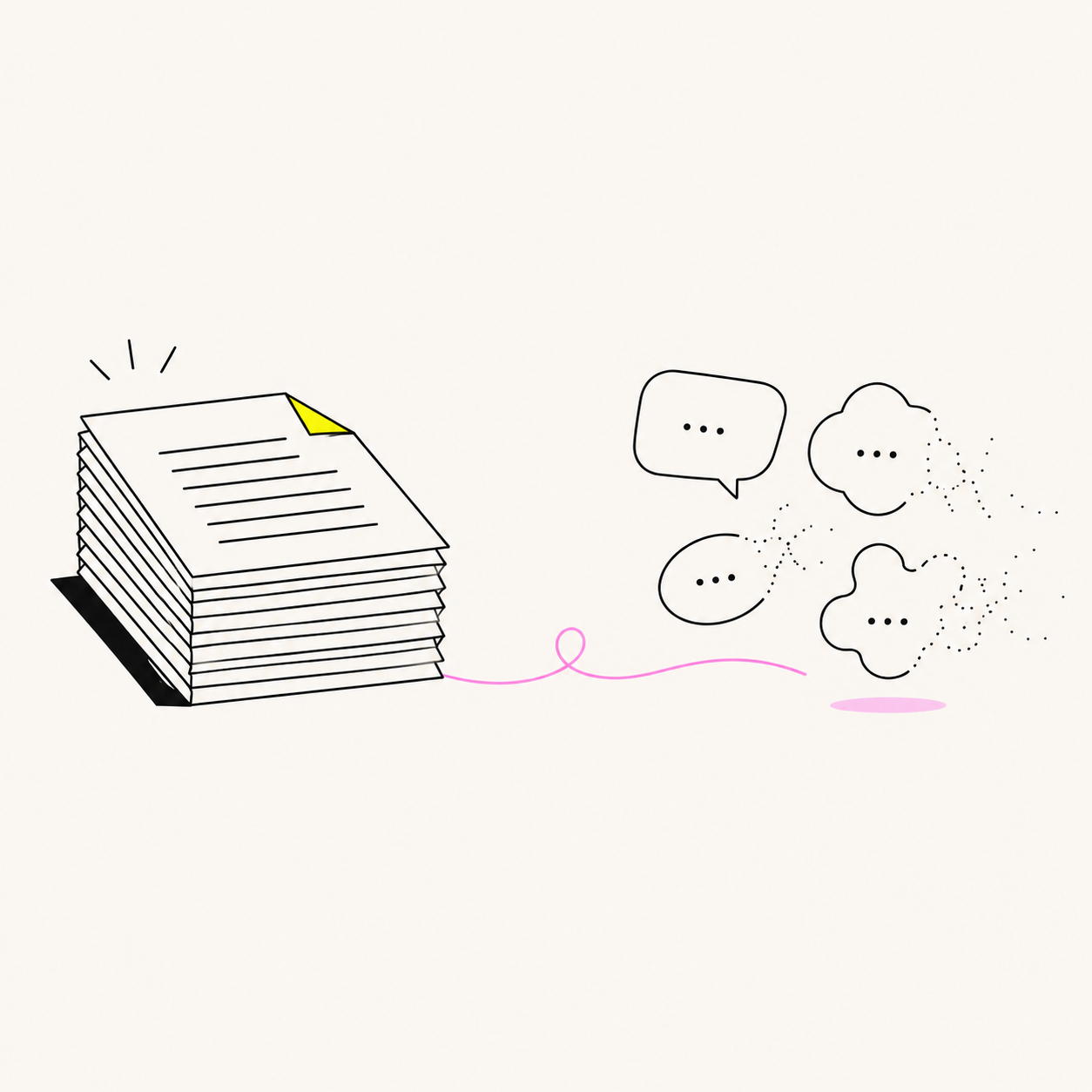
Real passages are different. Ten sentences your brand actually wrote give the model your patterns: your sentence length, your rhythm, the words you reach for and the ones you avoid. Patterns beat labels every time.
MIT NANDA (The GenAI Divide, 2025) found that about 95% of enterprise generative AI pilots deliver no measurable P&L impact, and that the tools which stall do so because they lack context and don't adapt to real work. A voice guide made of adjectives is the same failure in miniature: no context for the model to work from, so nothing improves.
Guideline styleWhat the AI receivesEffect on outputAdjectives ("bold, warm, human")Vague labelsBarely shifts word choiceRules ("we say / we don't say")Explicit constraintsBlocks off-brand phrasingMechanics (sentence length, punctuation)Structural patternShapes rhythm and formatCorpus of real passagesYour actual patternsMakes it sound like you
What actually makes AI sound like your brand?
Four things make AI sound like your brand, layered in order: worldview, explicit rules, mechanics, and a corpus of real passages. Each one does a job the others can't.
Worldview comes first. Before word choice, the AI needs to know what your brand believes and how it sees its work. A clear point of view gives every sentence something to point at.
Rules come next as a "we say / we don't say" table, then mechanics: sentence length, punctuation habits, whether you use contractions, how you open and close. These are concrete enough for a model to follow.
The corpus does the heavy lifting. A set of real, gold-standard passages shows the AI your patterns directly, which is why examples beat adjectives. Layer all four and the floor rises, but a human still signs off before anything ships. This is one place Utilaa's Context Intelligence earns its keep, holding your voice as one governed source of truth.
MIT NANDA (2025) found the pilots that fail tend to be the ones whose tools carry no context. Vague voice is the same trap in one dimension: the output never feels like the brand, so no one trusts it, and the pilot quietly stalls.
What does a good "we say / we don't say" table look like?
A good "we say / we don't say" table pairs the phrasing your brand uses with the phrasing it avoids, so the contrast is unmistakable. It replaces abstract traits with decisions a model can actually apply.
Each row targets a real habit, not a vibe. The point is to remove ambiguity: given two ways to say something, the table tells the AI which one is yours. Read each row as a use-case-level example: the phrase on the left is what we'd actually write in a launch, a landing page or a sales note, and the phrase on the right is the generic default we're steering the model away from.
Here's the version we use for Utilaa's own voice, and it doubles as a worked example.
We sayWe don't sayAI, used wellCutting-edge AI solutionsTurning AI into business capabilityTransformative digital synergyWork you'd put your name toBest-in-class deliverablesOne governed source of truthA seamless ecosystemA human always signs offFully automated, hands-offBuilt once, reused everywhereBespoke every single timeGoverned context layerRobust AI platform
Keep the table short and specific. Ten to 20 rows covering your real temptations beat a hundred generic ones. Consistent brand presentation can lift revenue by up to 33% (Lucidpress/Marq brand consistency study), and a table like this is one of the cheapest ways to hold that consistency while many hands write through many logins.
What is the difference between voice and tone for AI?
Voice is constant; tone flexes by use case. Voice is who your brand is on the page, the same in every message. Tone is how that voice adjusts to the job in front of it, the audience and the channel.
A single brand voice can sound calm in a complaint reply and upbeat in a product launch without becoming a different brand. A launch and a complaint reply share a voice but not a tone. The worldview and word choices hold steady while the register shifts to fit the moment.
Here's the part most guidelines miss: a model learns this split from examples, not from adjectives, and it learns it best at the use-case level. Show it a great launch post and a poor one, a great complaint reply and a clumsy one, and it picks up which register belongs to which job. Good and bad examples both teach. The bad ones mark the edges of where your brand won't go, which a list of traits can never do.
Think about what the model is actually doing. It writes by predicting the next token, the next word or word-fragment, from everything it has seen. Your examples teach it which tokens belong to your brand and which don't: that you reach for "used well" and not "cutting-edge", "source of truth" and not "ecosystem". You aren't describing a mood, you're narrowing the vocabulary it draws from.
There's a useful way to picture this. Language models place words in a high-dimensional meaning space, where related words sit close together and meaning is captured by position (word2vec, Mikolov et al., 2013; GloVe, Pennington et al., 2014). Every brand occupies a slice of that space: a neighbourhood of vocabulary and register it actually lives in. A corpus of your real writing points the model at your slice, so it draws from your neighbourhood of meaning rather than the flat average of everyone else's. Adjectives can't do this. "Bold" points at millions of scattered places at once; ten real passages point at one.
For AI, then, you set voice once and vary tone by use case. The corpus and rules define the voice; a short brief per task, apology, announcement, sales email, sets the tone. Getting this split right stops two failures at once: robotic sameness, and drift where the brand feels like a different company on every channel. McKinsey's State of AI (2025) found 72% of organisations now use generative AI, up from 33% a year earlier, which means more channels, more authors, and more need for a voice that holds while tone moves.
How do you build a brand voice corpus if you don't have one?
If your brand has no corpus, you build one, and it's more straightforward than it sounds. You need golden samples and a founder interview, then a place to keep them.
Start with golden samples. Gather 10 to 20 pieces of writing that sound exactly right, or write them fresh for the purpose: an ideal email, a strong landing page paragraph, a post you'd be proud of. These become the patterns the AI copies.
Then run a founder interview. Capture the worldview, the strong opinions, the phrases the founder always uses and the ones that make them wince. Much of a business voice lives in one or two people's heads, so get it out and write it down.
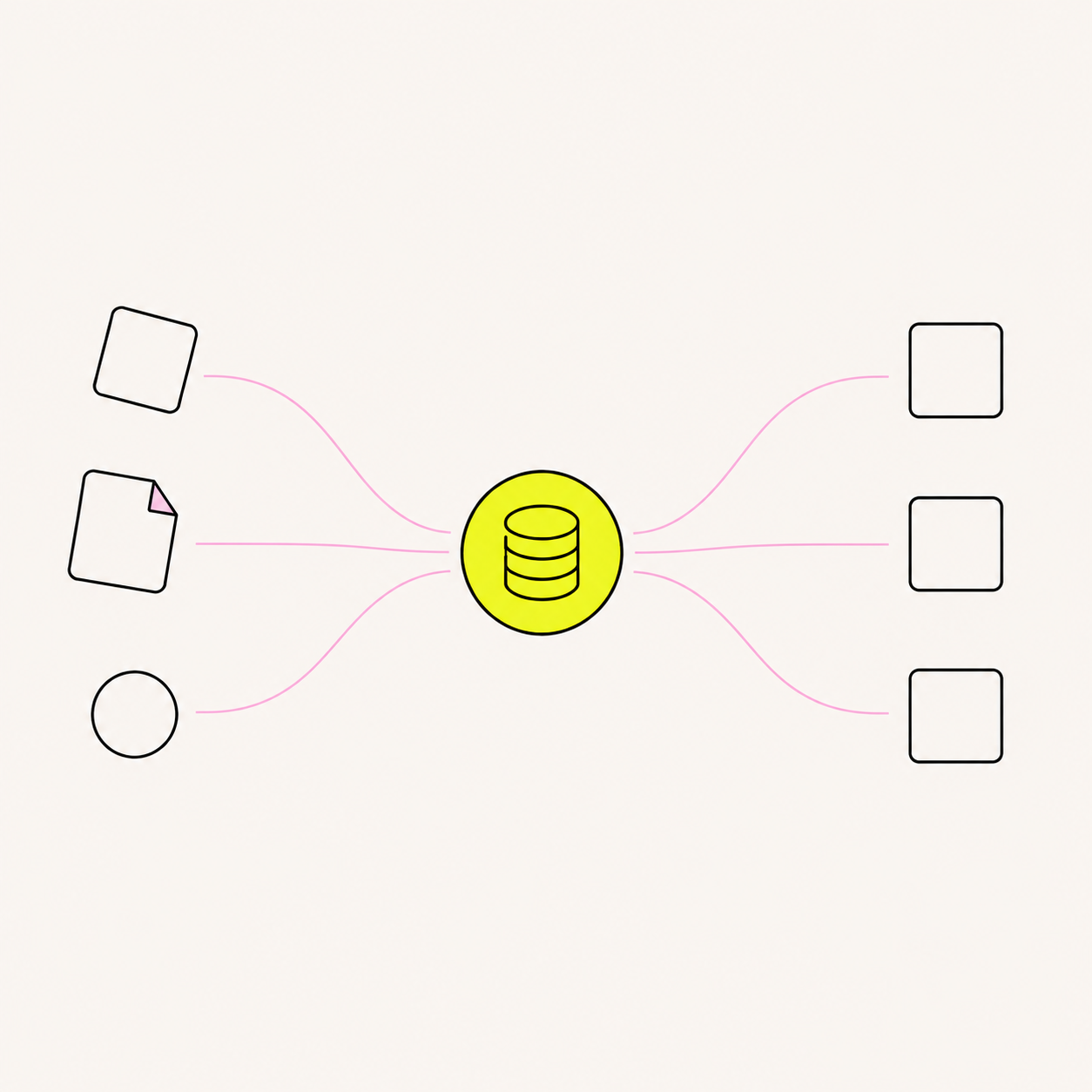
Finally, store it as one governed source of truth rather than a file on someone's laptop. Built once, it's reused everywhere, and it compounds as you add better examples. MIT NANDA (2025) traced most pilot failures to tools that carry no context and don't improve over time, so a small, well-kept corpus that grows with use solves more than a clever prompt ever will.
Frequently asked questions
How many example passages does an AI need to learn a brand voice?
A useful starting corpus is 10 to 20 real, gold-standard passages that genuinely sound like the brand. Quality matters more than volume. A handful of sharp, on-brand examples teaches a model more than hundreds of average ones, because it copies the patterns you actually show it.
Can AI copy a brand voice from a written style guide alone?
Not well, if the guide is mostly adjectives. Traits like "warm" or "bold" barely constrain word choice. A model needs explicit rules and real example passages to reproduce a voice. Pair the style guide with a corpus and a "we say / we don't say" table for a workable result.
Is brand voice the same as tone of voice?
No. Voice is constant, the identity that stays the same across every message. Tone flexes with the situation, audience and channel. One brand voice can sound serious in a legal notice and lively in a launch email without becoming a different brand. You set voice once and vary tone by task.
Will AI-written content sound generic?
It sounds generic when the AI has no context. Point a capable model at a task with only vague adjectives and you get fast, confident, generic output. Give it your worldview, rules and a corpus of real passages, and it sounds like you. Context is the difference, and a human still reviews the result.
What should never go into a brand voice corpus?
Keep out anything off-brand, out of date, or legally sensitive: old writing that no longer reflects the brand, personal data, and confidential client or third-party material. The corpus is a source of truth, so weak or risky examples do real damage. Curate it, and check anything uncertain with a human.
Does building a brand voice for AI replace human writers?
No. It gives writers and the wider team a reliable starting point that already sounds on-brand, which saves the slow part. People still shape, judge and approve the work. At Utilaa a human always signs off before anything ships, because voice is a matter of judgement, not just pattern-matching.
If you'd like to see what a governed brand voice looks like for your business, book a call.

Latest insights and trends

Ready to use AI well?